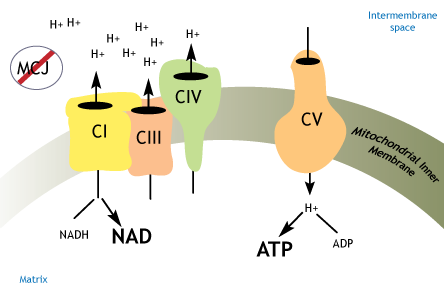
In the absence of MCJ there is a significant
increase in Complex I activity. Although several proteins
have been identified that are required for Complex I to be fully
active; MCJ is one of a few molecules that repress its activity. Data
suggests that loss of MCJ results in accumulation of supercomplexes;
loss of MCJ leads to increased Complex 1 activity and increased
mitochondrial membrane potential (MMP), but does not result in
elevated reactive oxygen species (ROS).
MCJ is a negative
regulator of mitochondrial function. Loss of MCJ leads to increased
mitochondrial membrane potential and increased ATP production. One of
the
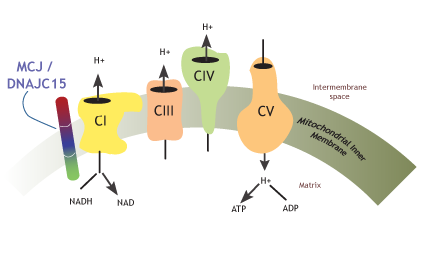
proposed mechanisms by which MCJ maintains lower mitochondrial
respiration is through its negative regulation of Complex I.
MCJ/DNAJC15 acts as a mitochondrial respiratory repressor; Hatle et al., Mol Cell Biol.>> More

 Search
for Products
Search
for Products

